A metalloid is a chemical element with properties that are in between or a mixture of those of metals and nonmetals and which is considered to be difficult to classify unambiguously as either a metal or a nonmetal. A metalloid is a type of chemical element which has a preponderance of properties in between or that are a mixture of those of metals and nonmetalsThere is no standard definition of a metalloid and no complete agreement on which elements are metalloids.

Metals Non Metals And Metalloids
The six commonly recognised metalloids are boron.

Metal nonmetal and metalloid definition. There is no. Metalloids have semiconductor properties and form amphoteric oxides. Despite the lack of specificity the term remains in use in the literature of chemistry.
Unlike metals they are neither malleable nor ductile. Entry 1 of 2 1. Astatine which is usually classified as a nonmetal or a metalloid has been predicted to have a metallic crystalline structure.
How can metalloids be identified. Some elements between the metals and non-metals in the periodic table have properties which are a mixture of the properties of metals and non-metals. Metalloids Definition Metalloid in chemistry is a term which describes a chemical element forming a simple substance having properties intermediate between those of a typical metal and a typical nonmetal.
The reactive nonmetals differ in nonmetallic character. Metalloid definition is - an element intermediate in properties between the typical metals and nonmetals. Nonmetals have a high electronegativity.
Hydrogen H is an exception which is the first element of the periodic table and normal temperature and pressure hydrogen show the properties of nonmetal. Main Difference The main difference between Metals and Metalloids is that Metals are considered as the elements that comprise a very low value of electronegativity whereas Metalloids are the elements that are considered to contain an intermediate value of electronegativity. The metalloid elements are found in the middle of the periodic table at the point where the metals and nonmetals meet.
Non Metals - There is no definition of a nonmetal. Nonmetals are distributed into two groups reflecting their relative tendency to create chemical compounds specifically reactive nonmetals and noble gases. They are often called semi-metals.
An element intermediate in properties between the typical metals and nonmetals. Commonly recognized metalloids are Boron B Silicon Si Germanium Ge Arsenic As Antimony Sb and Tellurium Te. Nonmetals are neither malleable nor ductile in nature.
Metalloids form a jagged region in the periodic table separating elements which have clear metallic properties from elements which have clear non-metallic properties. Just like nonmetals metalloids are neither ductile nor malleable in nature. These elements are called metalloids or.
Metalloids have an intermediate value of electronegativity. Metalloids or semimetals are present just to the right of metals and possess properties of metals as well as non-metals. Metalloids are brittle lustrous metallic elements that exhibit semiconductive properties.
A metalloid is a chemical element that exhibits some metal and some nonmetal properties. Malleability and Ductility. In this lesson youll learn the definition of a metalloid as well as the.
Metalloids are those elements that show properties of both metals and nonmetals. Block In The Periodic Table. Most metalloids have a shiny metallic appearance but are brittle unexceptional electrical conductors and display nonmetallic chemical properties.
Physically a nonmetal tends to have a relatively low melting point boiling point and density. A nonmetal is typically brittle when solid and usually has poor thermal conductivity and electrical conductivity. What does metalloid mean.
Although they do not readily alloy with metals each metalloid selectively compounds with certain metal elements to form alloys. Metals are malleable and ductile in nature. A metalloid is an element having intermediate properties of both metals and nonmetals.
They have physical and chemical properties intermediate between those of metals and nonmetals. A metal is an element which is typically hard shiny fusible malleable and ductile with good electrical and thermal conductivity. A nonmetal is an element that does not have the properties of a metal.
Between the metals and nonmetals is a group of elements known as either the semimetals or the metalloids which are elements that have properties intermediate between those of the metals and nonmetals. Generally any element lacking or having a deficiency in the preponderance of metallic attributes can be considered as a nonmetal. In chemistry a nonmetal or non-metal is a chemical element that mostly lacks the characteristics of a metal.
Comparative Study of Metals Nonmetals and Metalloids. A nonmetal that can combine with a metal to form an alloy.
Metals and non-metals in the periodic table. An element can be identified in 3 different ways.

Metals And Non Metals Of The Periodic Table
The nonmetals lis t which makes up the periodic table includes hydrogen helium carbon sulfur nitrogen oxygen radon neon other halogens and noble gases etc.
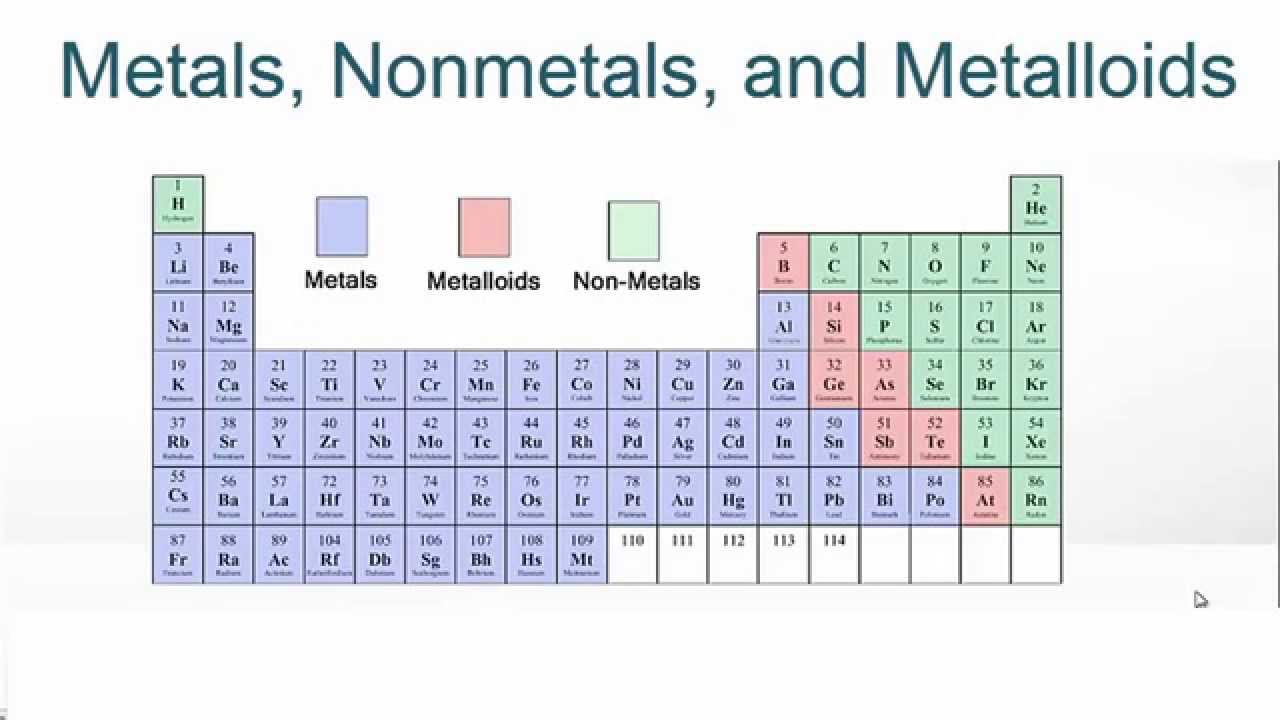
Metal non metal semimetal periodic table. Metalloids are a group of elements that run from Boron to Polonium in the periodic table that bridge the metals and non metals. It divides the metals on the left half of the table from the non-metals on the right side of the table. In the periodic table.
Except for Germanium Ge and Antimony Sb all the elements to the left of that line can be classified as metals. These are elements that exhibit both properties of metals and non metals. An elements position on the Periodic Table tells us whether it is a metal a non-metal or a semi-metal.
Think of it as the prime meridian of the periodic table. Elements present to the left of the line of the periodic table are said as metals though elements present to the far right of the periodic table are said as non-metalsMetalloids or semimetals are present just to the right of metals and possess properties of metals as well as non-metalsHydrogen H is an exception which is the first element of the periodic table and normal temperature and. They are separated by a diagonal band of semimetals.
On the periodic table metalloids are found along a zig-zag line between boron and aluminum down to polonium and astatine. Elements sometimes also classified as nonmetals are the metalloids boron B silicon Si germanium Ge arsenic As antimony Sb tellurium Te and astatine At. They are a group of elements that have a range of properties that are not quite metals and not quite non metals.
Non-metals are found on the far right hand side of the table. Elements to the left of the line are considered metals. Non-metal elements are on the right of the stepped line.
The Metalloids is the term given to the elements in the periodic table that exist between metals and non metals on the right hand side. The metals are to the left of the line except for hydrogen which is a nonmetal the nonmetals are to the right of the line and the elements immediately adjacent to the line are the metalloids. Those diagonals are the metalloids.
Metals are located on the left of the periodic table and nonmetals are located on the upper right. Elements just to the right of the line exhibit properties of both metals and nonmetals and are termed metalloids or semimetals. Metalloids Some elements between the metals and non-metals in the periodic table have properties which are a mixture of the properties of metals and non-metals.
Elements to the far right of the periodic table are nonmetals. Top left Boron and Aluminium bottom right Polonium and Astatine. Nonmetals An approximate way to classify metalloids is to look at the Periodic Table of elements.
The non metalsin periodic table are mainly in the upper right position The only chemical element that is not found in this region of the table is Hydrogen which is located in the upper left corner together with Alkaline Metals but since it behaves in most circumstances as a Non-Metal it is classified as such. Metalloids are chemical elements that display properties of both metals and nonmetals. These elements are called metalloids.
A description and practice of finding metals nonmetals and metalloids on the Periodic TableIn general metals are found on the left-hand side of the period. See the double diagonal line. Usually the semimetals or metalloids are listed as boron silicon germanium arsenic antimony tellurium and polonium.
Properties of Metals Nonmetals and Metalloids are discussed and you see where to find them on the periodic table. A semimetal is a material with a very small overlap between the bottom of the conduction band and the top of the valence bandAccording to electronic band theory solids can be classified as insulators semiconductors semimetals or metalsIn insulators and semiconductors the filled valence band is separated from an empty conduction band by a band gap. The line begins at boron B and extends down to polonium Po.
Metals are found on the left hand side of the table. The metals list which makes up the periodic table includes iron lead gold aluminum platinum uranium zinc lithium sodium tin silver etc. Of course there are those pesky elements residing on the zigzag that dont quite fit in either category.
As there is no widely agreed definition of a nonmetal elements in the periodic table vicinity of where the metals meet the nonmetals are inconsistently classified by different authors. In the periodic table you can see a stair-stepped line starting at Boron B atomic number 5 and going all the way down to Polonium Po atomic number 84. Metals are lustrous good conductors of electricity and readily shaped they are ductile and malleable whereas solid nonmetals are generally brittle and poor electrical conductors.
Semi-metals are found in the region between the metals and non-metals. Metal elements are on the left of a stepped line starting at B-Al-Si. Those elements are dubbed the metalloids.
Non metals in periodic table. Also many periodic tables have a stair-step line on the table identifying the element groups. On many periodic tables a jagged black line see figure below along the right side of the table separates the metals from the nonmetals.