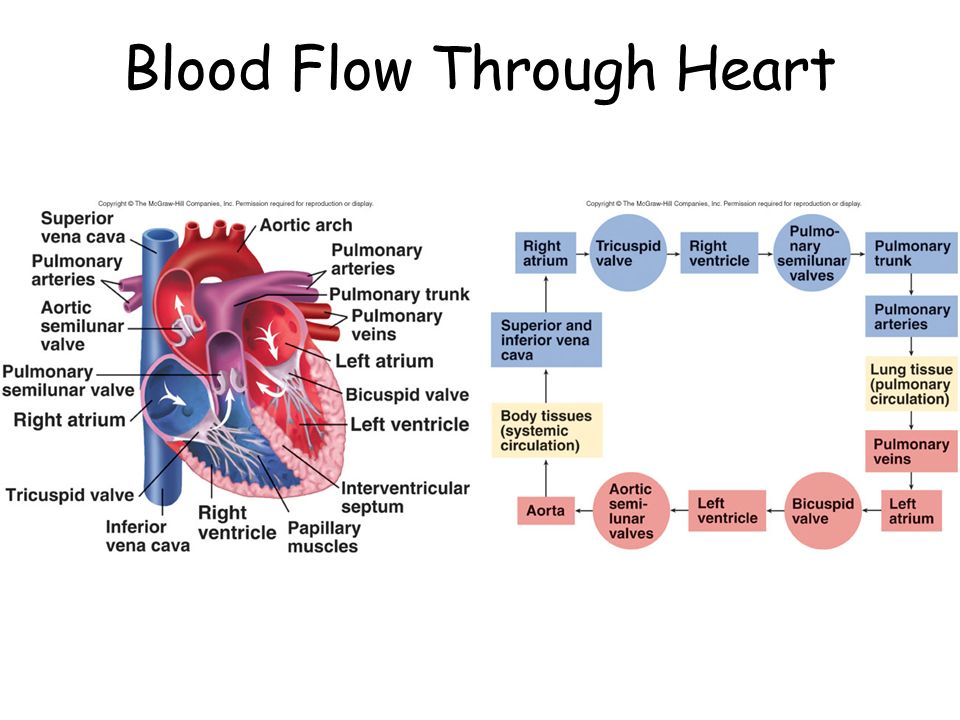
The pulmonary system is the path blood takes through the lungs receiving fresh oxygen and releasing carbon dioxide. Beginning with the superior and inferior vena cavae and the coronary sinus the flowchart below summarizes the flow of blood through the heart including all arteries veins and valves that are passed along the way.
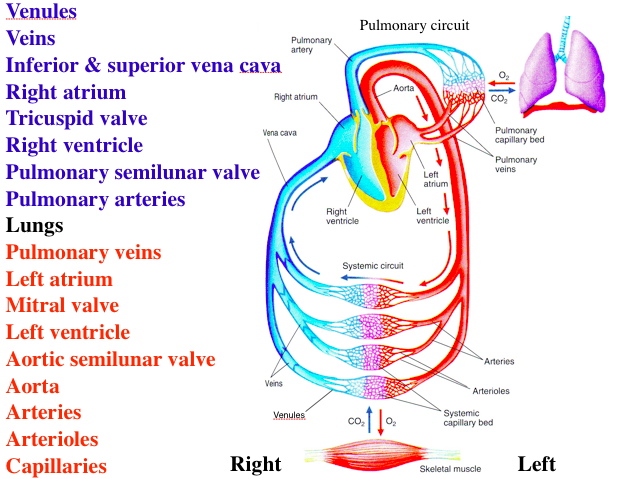
Blood Flow Through Systemic And Pulmonary Circuits
The superior vena cava is the large vein that brings blood from the head and arms to the heart and the inferior vena cava brings blood from the abdomen and legs into the heart.
Tracing blood flow through the body. Always remember that it must flow through 6 areas on the right side and then 6 areas on the left side this equals 12 steps. This vast system of. The pulmonary circuit and systemic circuit.
From the left atrium blood moves into the left ventricle which pumps blood into the aorta. When the LA contracts blood travels through the mitral valve 10 and into the left ventricle LV 11. The LV is a very important chamber that pumps blood through the aortic valve 12 and into the aorta 13.
Blood flow through the capillary beds reaches almost every cell in the body and is controlled to divert blood according to the bodys needs. This blood carries little oxygen as it is returning from the body where oxygen was used. Superior and inferior vena cavae and the coronary sinus.
Blood Throught the Heart. Blood returns to the heart from the body via two large blood vessels called the superior vena cava and the inferior vena cava. Regulation of blood flow is managed by adjusting the contraction or relaxation of smooth muscle fibers in the walls of arterioles and capillaries.
Blood Flow of the Body includes arteries and veins. It pumps the blood through the mitral valve to the left ventricle. This is an online quiz called Tracing blood through Heart Body There is a printable worksheet available for download here so you can take the quiz with pen and paper.
The oxygen in the lungs binds to hemoglobin which is contained in red blood cells. The major systemic arteries shown here deliver oxygenated blood throughout the body. The aorta branches into other arteries which then branch into smaller arterioles.
But first we would like to review quickly how a drop of blood flows through the heart. Figure 2053 Systemic Arteries. The left atrium receives oxygenated blood through the pulmonary veins from the lungs.
The arterioles meet up with capillaries which are the blood vessels where oxygen is exchanged for carbon dioxide. Many people in medical terminology anatomy and physiology or other healthcare-related classes may find it helpful to review the pathways that blood may travel through the human body. The aorta and its branchesthe systemic arteriessend blood to virtually every organ of the body Figure 2053.
As blood is pumped away from the heart it travels through the aorta to arteries aterioles and the capillary beds. Superior and inferior vena cava right atrium tricuspid valve right ventricle pulmonary valve pulmonary. Blood flows through the heart in 12 easy steps.
For better illustration look at the picture below and note how the right and left side are separated. This control can be systemic affecting the whole circulatory system or localized to specific tissues or organs. The circulatory system circulates blood in two circuits.
The left ventricle then pumps blood through the aortic valve and into the aorta the artery that feeds the rest of the body through a system of blood vessels. Blood vessels are the conduits through which blood is transported and blood contains the valuable nutrients and oxygen that are needed to sustain tissues and organs. Search Help in Finding Tracing blood through Heart Body - Online Quiz Version.
The heart a double-sided pump has the amazing ability to pump approximately 5 liters of blood through an average adults body. After oxygen is removed from the blood the deoxygenated blood flows to the. Thats long enough to go around the world more than twice.
From the capillaries we move into the smallest veins and follow the direction of blood flow into larger veins and back to the heart. Blood now returns to the heart from the lungs by way of the pulmonary veins 8 and goes into the left atrium LA 9. The superior vena cava is the large vein that brings blood from the head and arms to the heart and the inferior vena cava brings blood from the abdomen and legs into the heart.
The heart provides the muscle needed to pump blood throughout the body. Tracing blood flow through arteries follows the current in the direction of blood flow so that we move from the heart through the large arteries and into the smaller arteries to the capillaries. This vast system of blood vessels - arteries veins and capillaries - is over 60000 miles long.
Blood circulation begins when the heart relaxes between heart beats. Blood Flow Through the Heart. We recently followed a drop of blood through the heart.
The right atrium receives deoxygenated blood through the superior and inferior vena cavas from the body and pumps it to the right ventricle through the tricuspid valve which opens to allow the blood flow through and closes to prevent blood backing up the atrium. The Path of blood through the Circulatory System. To get to the aorta blood passes through the aortic semilunar valve which serves to keep blood flowing from the aorta back into the left ventricle.
This week we would like to follow a drop of blood through the body. Blood Flow Through the Heart.

40 4a Blood Flow Through The Body Biology Libretexts
Trace The Pathway Of Blood Through The Body Using The Following Terms Aorta Right Atrium Left Atrium Right Ventricle Left Ventricle Ppt Download

How The Heart Works Diagram Anatomy Blood Flow

Follow A Drop Of Blood Through The Body Cpr Works
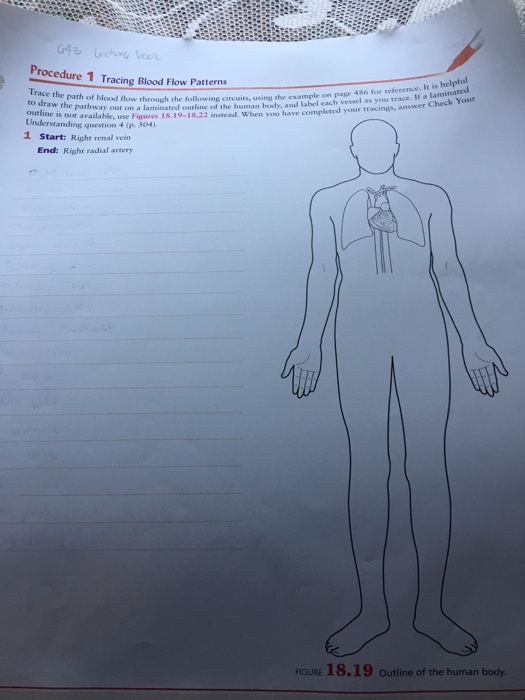
Solved Procedure 1 Tracing Blood Flow Patterns It Is Help Chegg Com