Conditioned Response CR a response to a stimulus CS that has been learned through repetition classical conditioning. Operant conditioning is where somethings behavior is modified through consequences.
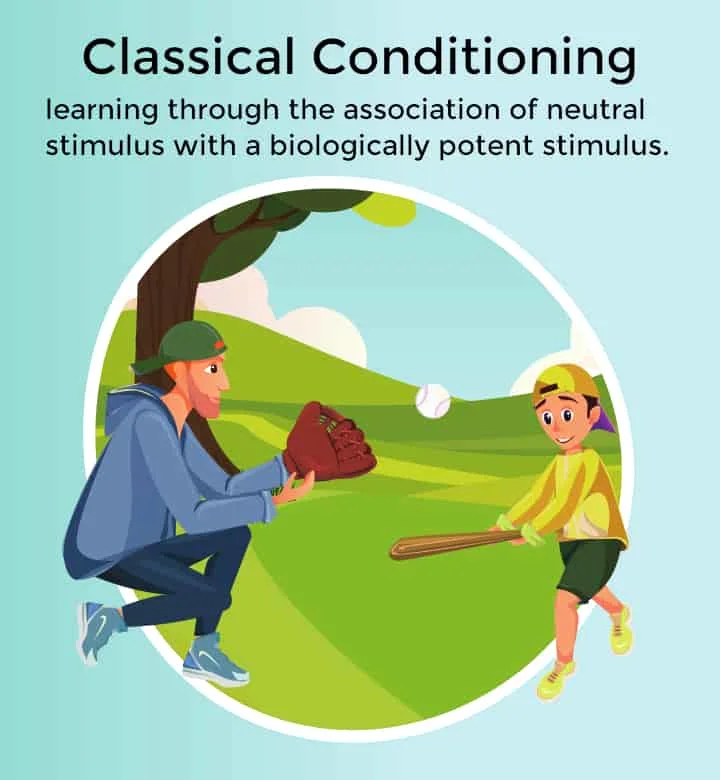
Classical Conditioning In Psychology Everyday Life Examples
Classical conditioning involves associating an involuntary response and a stimulus while operant conditioning is about associating a voluntary behavior and a consequence.
/2794859-article-classical-conditioning-5ac50cc9c5542e0037d54692.png)
Classical conditioning for dummies. Created by Stella Bastone in Toronto Canada. This is a type of learning which explains that some learning can be involuntary emotional and physiological responses. In the classical-conditioning sense learning refers to associations formed between events or actions.
A stimulus without prior learning elicits a particular response. We learn new responses involuntary response when two stimuli are presented at the same time. Have a look at the diagram below which explains how classical conditioning takes places.
To summarize classical conditioning later developed by Watson 1913 involves learning to associate an unconditioned stimulus that already brings about a particular response ie a reflex with a new conditioned stimulus so that the new stimulus brings about the same response. This is because its based on empirical evidence carried out by controlled experiments. Conditioning occurs when a neutral stimulus is presented before the unconditioned stimulus.
Ivan Pavlov a Russian Physiologist and the first Russian to win the Nobel Peace Prize for Physiology or Medicine was studying the gastric system of dogs when he observed that the dogs began salivating in anticipation of food. For example the repeated use of a drug could cause the body to compensate for it in an effort. In the social learning theory sense learning refers to discovering things by watching other people.
Classical conditioning was a theory introduced by Ivan Pavlov. Khan Academy is a 501c3 nonprofit organization. Classical conditioning was discovered by Ivan Pavlov a Russian physiologist who conducted a series of classic experiments with dogs.
Classical conditioning can help us understand how some forms of addiction or drug dependence work. Classical conditioning is a form of learning whereby a conditioned stimulus CS becomes associated with an unrelated unconditioned stimulus US in order to produce a behavioral response known as a conditioned response CR. Both classical and operant are a type of conditioning.
Stay tuned next week for the difference between classica. Classical conditioning is also a reductionist explanation of behavior. A strength of classical conditioning theory is that it is scientific.
Discovered by Russian physiologist Ivan Pavlov classical conditioning is a learning process that occurs through associations between an environmental stimulus and a naturally occurring stimulus. In operant conditioning the learner is also rewarded with incentives 5 while classical conditioning involves no such enticements. Neutral conditioned and unconditioned stimuli and responses Our mission is to provide a free world-class education to anyone anywhere.
The conditioned response is the learned response to the previously neutral stimulus. Classical Conditioning - Very basic concepts. Medical Definition of classical conditioning.
In todays video we go over Pavlovs classical conditioning and examples of classical conditioning. Classical conditioning is a type of learning that had a major influence on the school of thought in psychology known as behaviorism. This is because a complex behavior is broken down into smaller stimulus-response units of behavior.
For example Pavlov 1902 showed how classical conditioning could be used to make a dog salivate to the sound of a bell. Classical conditioning is where something learns when two. Closed captions very kindly provided by Karen Hamilton.
This diagram illustrates how Pavlov classically conditioned his dogs to salivate when hearing a bell ring. In the operant-conditioning sense learning refers to the process of increasing the likelihood of a behavior occurring or not occurring based on its consequences. Classical conditioning is the process by which a naturally occurring stimulus is paired with a stimulus in the environment and as a result the environmental stimulus eventually elicits the same response as the natural stimulus.
At the time Pavlov introduced classical conditioning he was working on another research. Conditioning in which the conditioned stimulus as the sound of a bell is paired with and precedes the unconditioned stimulus as the sight of food until the conditioned stimulus alone is sufficient to elicit the response as salivation in a dog compare operant conditioning. Classical Conditioning also known as Pavlovian Conditioning was discovered by accident.
Classical conditioning also called pavlovian conditioning and respondent conditioning is a type of learning involving animals caused by the association or pairing of two stimuliThe simplest form of classical conditioning is reminiscent of what Aristotle would have called the law of contiguityEssentially Aristotle said When two thing commonly occur together the appearance of.

Classical Conditioning And Operant Conditioning Explained By Josh Pitts Medium
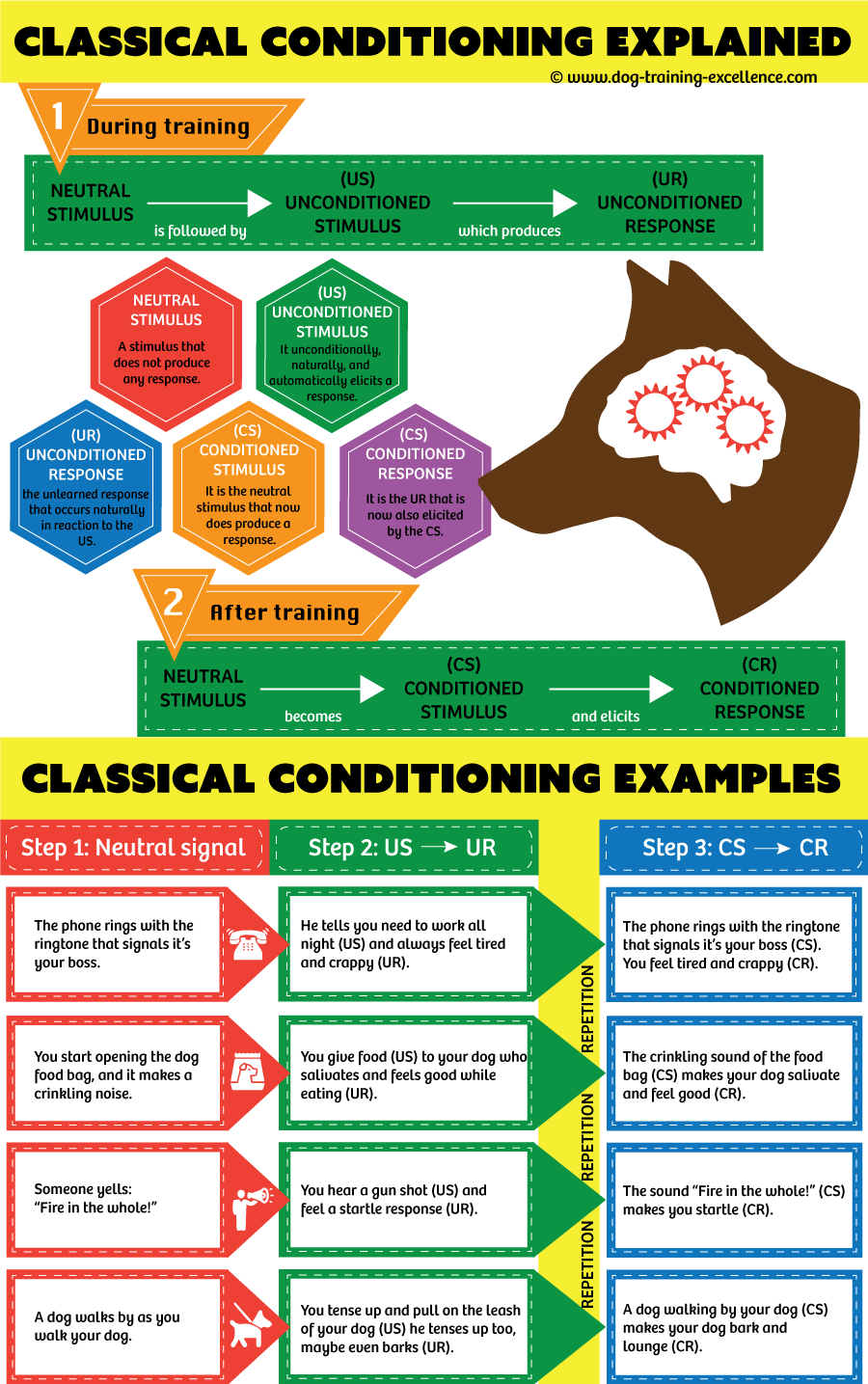
Classical Conditioning A Basic Form Of Learning

Classical Conditioning How It Works And How It Can Be Applied

Classical Conditioning Adolescent Trends For Dummies
Classical Conditioning How It Works With Examples